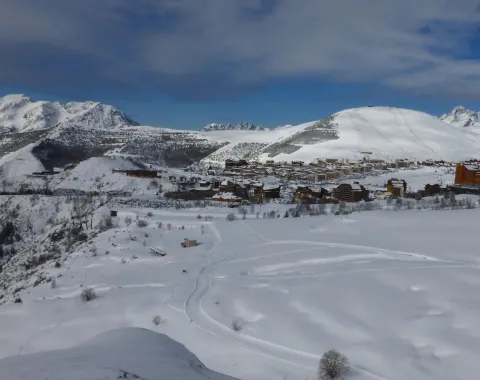
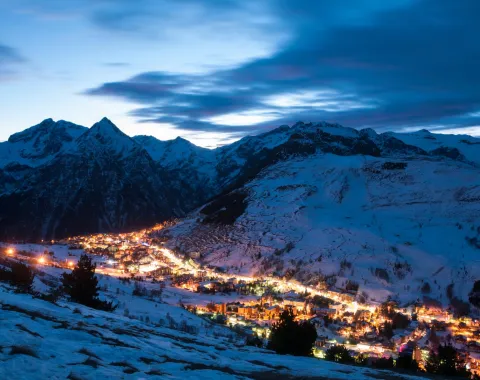
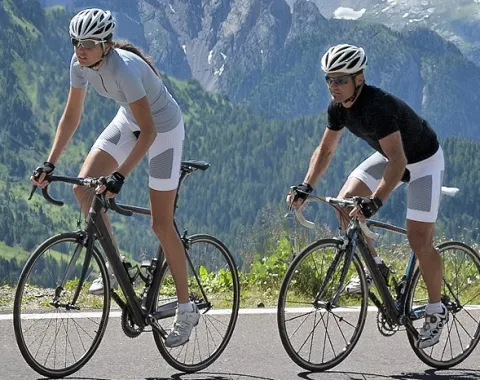
The Marmotte Granfondo Alpes is one of the most famous and demanding cyclosportives in Europe, attracting thousands of riders to the French Alps every year. Starting in the Bourg‑d’Oisans area, the event follows a historic route through legendary Tour de France climbs before a spectacular finish at Alpe d’Huez. For many amateur cyclists, completing the Marmotte is a lifetime goal and a benchmark of endurance, climbing ability and mental toughness.
Marmotte Granfondo Alpes 2026: Key facts
Route and iconic climbs
The Marmotte route links some of the most iconic passes in the French Alps, combining high altitude with long, sustained climbs. The course typically begins with a flat or gently rolling section before the first major ascent, allowing riders to warm up before the real climbing starts.
Climbs include:
The descent after the Glandon is usually neutralised and excluded from official timing to reduce the temptation to descend dangerously fast. This focus on safety allows riders to concentrate on pacing themselves for the long series of climbs that follow.
Why the Marmotte is considered so hard
The Marmotte’s reputation comes from the combination of distance, elevation and the unrelenting nature of the course. Riders face over 5,000 m of climbing across a single day, with multiple HC passes and a summit finish when legs are already exhausted.
Each year, roughly 7,500 cyclists take to the start line, with finishing times ranging from under 6 hours for the fastest to as much as 13 hours for the last finishers. Weather conditions in the high mountains can vary from intense heat in the valleys to chilly winds and cooler temperatures on the passes, adding another layer of challenge. This mix of physical effort, altitude and changing conditions is exactly what makes the Marmotte such a coveted achievement.
Training tips for Marmotte first‑timers
To enjoy the Marmotte rather than simply survive it, focused preparation is essential. Riders should build a solid aerobic base over several months, then progressively add long rides with significant climbing to simulate the event’s demands. Incorporating back‑to‑back mountain days or hilly sportives can help the body adapt to multiple long ascents and extended time in the saddle.
Strength and core work off the bike support climbing efficiency and comfort, especially over the final hours on Alpe d’Huez. Practising pacing with a power meter or heart‑rate zones can prevent early over‑exertion on the Glandon and Télégraphe, saving energy for the Galibier and the finish climb. Finally, dialling in nutrition and hydration strategies during training—carb intake, electrolyte balance and fueling on long rides—helps avoid energy crashes on race day.
Practical tips: registration, logistics and equipment
Entries usually open several months before the event, and demand is high, so early registration is recommended to secure a place. Many riders choose to stay in or around Bourg‑d’Oisans or Alpe d’Huez to simplify logistics, with some opting for specialist cycling tour operators that offer accommodation, transfers and mechanical support.
On the equipment side, a compact or mid‑compact chainset with a wide‑range cassette is a smart choice to handle long gradients at a sustainable cadence. Reliable braking performance for the long descents, appropriate gearing, and well‑tested clothing for variable mountain weather are all crucial. Bringing spares such as tubes, COâ‚‚ cartridges or a mini‑pump, and basic tools, ensures minor mechanicals don’t end your ride prematurely.
Is the Marmotte Granfondo for you?
The Marmotte Granfondo Alpes targets well‑trained cyclists who relish big alpine days and want to test themselves on an internationally recognised course. If you are comfortable with long rides, enjoy climbing and are prepared to follow a structured training plan, the event can be an unforgettable highlight of your cycling journey. For newer riders or those unsure about the full distance, shorter alpine sportives or a partial recon of one or two key climbs can be a useful stepping stone.